Monday, January 27, 2014

Liberty's Timeless Journey

Liberty is a concept that has been around for a long time.  It is not something that man invented; liberty was conceived in the mind of God before the very dawn of Creation.  Liberty is not something that everyone has, nor has every man in history been blessed with such a privilege, but every person bears a longing for it, inherent to his nature.  Liberty has seen many proverbial ups and downs throughout history, and it seems that America today is in one of those ‘downs.’  My question is one many are pondering: what can we do to restore true liberty to America?  First, I’d like to take a look at the history of liberty, for it is a timeless struggle. 

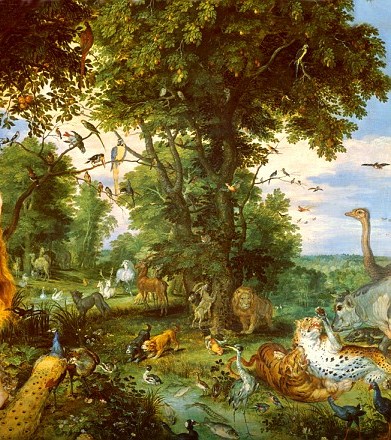
Travel back with me to approximately 2,000 years before the birth of Christ, and around the world to a beautiful, lush garden in the Middle East called Eden.  Life in that garden was perfect in the fullest sense of the word, and true liberty thrived.  The only two people on earth lived in the garden; they had dominion over the animals and were allowed to eat and enjoy all that God had created – with one condition: that they not touch the fruit of the tree that grew in the middle of the garden.  They obeyed and lived in that glorious, untainted liberty for a length of time – we don’t know exactly how long, but we may guess it was many years.  God’s perfection was spoiled, however, when a serpent came to the woman and convinced her that she could actually have something better than that perfect liberty—that by eating that fruit she could be like God—and she and her husband tasted the forbidden fruit.  They sinned against God, soiling the beauty and perfection of His creation, and from that moment forward, man has been in bondage to sin.

But God didn’t forget his vision of liberty, and generations after that first man and woman he chose a man named Abram through whom he would carry on that design.  He called Abram out of his land—out of bondage to sin—and gave him a new life and a new name: Abraham.  God built the Nation of Israel out of Abraham’s offspring, with the promise that Abraham’s grandchildren and great-grandchildren and great-great-grandchildren would become a mighty nation and thrive in God’s plan for liberty.  Soon, however, God’s people were no longer free: they were in captivity in Egypt.  After much suffering under the power-hungry Pharaoh, God called a timid man named Moses to lead his people out of Egypt and into liberty once again.

Israel lived in peace and freedom for many years, under what is today called a Theistic government: it wasn’t a monarchy, or a democracy, or a republic, or a dictatorship.  God, the only wholly just King, was sole ruler of Israel, and spoke through his prophets and judges.  Before long, however, they decided they wanted a king that they could see—they weren’t satisfied to have God ruling directly over them—so God gave Israel a king.  Freedom given by man always results in tyranny, and soon God’s people were in captivity again, sometimes under their own king, and often under the cruel kings of neighboring countries.  Israel fell away from God’s precepts countless times, and each time they were taken into captivity.  They bore the yoke of bondage in Assyria and in Babylon, and the oppression of the Philistines, Persians, Midianites, and others; and God never gave up his plan but liberated them each time.  Throughout all those generations, Israel was captive to sin.

Finally, when the Nation of Israel had long been subject to the tyranny of Rome and the domination of sin, God sent the ultimate Deliverer.  He sent his One and Only Son, who “was sent to heal broken hearts and proclaim liberty to the captives” (Luke 4:18).   Jesus Christ, God’s Son incarnate, took the sins of all humanity upon his shoulders; he brought liberty not only to God’s chosen nation, but also to all of mankind—all one has to do is repent and ask Jesus to free him, and the chains of all manner of evil fall from his wrists and his soul is liberated for eternity!

Still, the struggle for earthly liberty continues.  Travel forward with me to October 31 of the year 1522, when a poor monk nailed a document to the door of the Catholic Church in Wittenberg, Germany.  Martin Luther’s Ninety-Five theses pointed out fallacies in the philosophy of the church and advocated reform.  Luther spoke up for religious liberty and protested the stiff doctrines, rituals, and ecclesiastical structure of the church.  People began to break away from the strict doctrines of Catholicism, but the church recoiled, tightening its grip on the people.  Thus began the battle for religious freedom that eventually gave birth to the United States of America.  This Protestant Reformation spread from Germany into other countries throughout Europe, reaching England in 1529. 

The Anglican Church vacillated for nearly a century between Protestant sympathies and the strict doctrines of the Catholic Church; the period of unrest and indecisiveness culminated in the birth of the Puritan movement.  The Puritans, named for their desire to ‘purify’ the church of Roman Catholic doctrines, were reformers who sought relief from the overbearing Anglican Church.  These seekers of religious liberty finally received it through the Puritan Migration, when nearly twenty thousand Puritans relocated to the ‘New World’ and founded the colony of Massachusetts and commenced the American search for liberty.

 Between 1620, when the first Puritans arrived in Massachusetts, and the mid-1800s, hundreds of thousands more people left their home countries and settled in America.  America has become a melting pot of nationalities, backgrounds, and ideas, but all of the settlers in the New World had in common a search for religious freedom.  There was only one problem.  Free as the first settlers were from the religious oppression they had suffered in Europe, they inadvertently recreated it by defaulting to establishmentarianism themselves!  As time went on, new colonies were founded by leaders who disagreed with the state denominations.  For instance, Roger Williams and a small group of Baptists fled persecution in Massachusetts and founded the colony of Rhode Island.  Similarly, groups of Puritans, Lutherans, Quakers, and various reformed groups such as the Dutch, French, and German Reformed Churches came to America and founded their own colonies.

The framers of our Constitution recognized the danger posed by government-instituted religion, and sought to restore religious freedom as one of the protections enumerated in the Bill of Rights.  Contrary to many assumptions today, their intent was not to protect the government or the state from religion, but to protect religion from the government.  Even since the ratification of the First Amendment, we have seen countless instances of the government attempting to limit freedom of religious expression.  Common misunderstandings and disputes are embodied in the phrase “wall of separation of church and state,” about which I have already written.  The battle for liberty of conscience, though certainly momentous in the history of America, is only one part of a bigger picture.

Friday, January 17, 2014

In God We Still Trust

America’s national motto is inscribed behind the speaker’s rostrum in the House chamber and above the main door of the Senate chamber; it is engraved on the Washington Monument and stamped on every coin and bill of our currency.  In God We Trust.  Those four simple words represent America’s very foundation.  And yet, in modern America, God is banned from schools, ridiculed in politics, and shunned in the public square.  Worse, many Christians refuse to entangle themselves in politics, which leaves that arena conspicuously devoid of the light of Christ and allows this nation to continue turning its back on the God who made it mighty.  The phrase, “wall of separation between church and state” is being used by the secular world to strip religion from public life, as well as by the religious community to justify disengaging from the worldview battle.  America, once a Christian nation, is straying farther and farther from its foundation on the Rock.  It is imperative to gain insight into the minds of our Founders concerning religion, examine some of the modern misconceptions surrounding this issue, and understand some of God’s instructions to his people.  Christians should be deeply involved in and praying for every aspect of America, especially politics.

Many argue that America’s Founding Fathers were a bunch of atheists, agnostics, and deists who stood resolutely opposed to Christianity.  Though there were a few who fit that description, on the whole nothing could be farther from the truth; the only reason such claims survive is because so few explore the original writings of our Founders, though they were prolific writers.  It’s easy to know their personal beliefs on every issue, including the nature of their faith.  “I …[rely] on the merits of Jesus Christ for a pardon of all my sins,” said Samuel Adams, and Patrick Henry declared, “Being a Christian…is a character which I prize far above all this world…can boast.”  Benjamin Rush, Charles Carroll, John Witherspoon, Alexander Hamilton, John Adams, George Washington, James Madison… the list continues as America’s first patriots affirmed their trust in God.

Our Founders had very clear intentions for religion in America.  The last thing they wanted to do was create a government that would mandate a particular religion—they had seen religious persecution and its effects in Europe, and sought to protect this infant nation from such sorrows.  The so-called “wall of separation” isn’t found in the Constitution; the phrase was coined by Thomas Jefferson after the ratification of the First Amendment.  In a letter to a group of Baptists who had strongly protested establishing any state religion, he wrote, “Believing with you that religion is a matter which lies solely between Man & his God, … that the legitimate powers of government reach actions only, & not opinions, I contemplate with sovereign reverence that act of the whole American people which declared that their legislature should ‘make no law respecting an establishment of religion, or prohibiting the free exercise thereof,’ thus building a wall of separation between Church & State.  The First Amendment was intended to altogether eliminate governmental interference in religious matters; it was not meant to protect the government from religion, but to protect religion from the government!  James Madison explained it best when he said, “The purpose of separation of church and state is to keep forever from these shores the ceaseless strife that has soaked the soil of Europe in blood for centuries.”

Today, the “wall of separation” fairly describes the conundrum created by the evolution of religious thought in our country.  There are two ways the original meaning is twisted in modern America.  The first is the secular lashing out at the church.  Perhaps our Founders never considered that the religion of atheism would demand equal or superior standing to any form of theistic worldview; many demand freedom from the presence or manifestation of religion, especially Christianity, in public or in any way associated with any agency of government.  The second is the church withdrawing into its shell and refusing to fight back.  Don’t get me wrong—I know there are many Christians out there who are battling valiantly; but there are many more who adamantly believe they are not supposed to fight. 

1 John 2:15 instructs us, “Do not love the world nor the things in the world.”  Some Christians argue that this order is violated by those who get involved in politics.  However, in the 17th chapter of John, Jesus clearly states that Christians are not to be of the world, but are to remain in the world.  We mustn’t be worldly, but we shouldn’t be “other-worldly” either.  Being in the world includes being involved in politics.  Even liberal political commentator Bill Maher acknowledges, “Freedom isn’t free.  It shouldn’t be a bragging point that ‘Oh, I don’t get involved in politics,’ as if that makes you somehow cleaner.  No, that makes you derelict of duty in a republic.”  As Americans, it is our duty and privilege to claim responsibility for what goes on in our country.  As American Christians, that duty and privilege is nothing less than sacred.  Someone is going to rule this world; if not the Christians, then the non-Christians—if not the righteous, then the unrighteous.  When we shirk this responsibility as Christians, we leave this world—we leave our beloved nation—to the usurping reign of the enemy.

Ronald Reagan declared “Freedom prospers when religion is vibrant and the rule of law under God is acknowledged; …government should uphold and not undermine those institutions which are custodians of the very values upon which civilization is founded—religion, education, and, above all, family.”  Today, the vibrancy and enthusiasm of authentic Christianity have waned, and our government no longer supports those values; many policies directly contradict Biblical principles.  Public schooling was created so that children could read the Bible for themselves—the first elementary textbook was the New England Primer, which was full of lessons taken straight from Scripture—and yet the government has purged every essence of God’s law from those same schools.  Proverbs 22:7 warns that “The borrower becomes the lender’s slave,” and yet our national debt is well over $17 Trillion dollars.  Murder, adultery, and homosexuality are consistently condemned in the Bible, and yet these things are condoned in America through government-funded abortion, contraceptives for middle school students, and legalized gay marriage.  Our government has literally subsidized the breaking of every single one of the Ten Commandments.  How can the church simply stand by?  If we don’t step up, speak out, and return our nation to even the most fundamental Biblical ideals, these things will go on, and America will continue to crumble.

Romans chapter 13 gives instructions for good citizenship: be subject to authority, pay your taxes, follow the law—government is of God.  In John 17:18, Jesus sends us into the world to be his messengers, his representatives.  Proverbs 29:2 states, “When the righteous thrive, the people rejoice; when the wicked rule, the people groan.”  Friends, righteousness is not thriving in our beloved country today!  Now, I personally don’t feel called to be a politician, and I’m not the only one; but you and I can make a difference with our words, votes, and monetary donations to candidates and institutions that are taking a stand for Biblical economic policies and family values.  However we choose to do it, though, we must make it evident that we are still a Christian nation—that America’s motto still rings true.

Imagine a nation where the church and the state—religion and the government—are no longer divorced, but working together for the benefit of the nation as a whole.  Our Founders had unequivocal views on religion, and the Bible contains explicit instructions concerning politics as well.  The two are indivisible. The prayer of our country has long been, “God bless America!”  We must not forget that prayer.  So let us proclaim, in every private home, on every street corner, in every public square, in every voting booth, and from every office of government: “IN GOD WE STILL TRUST!”


Works Cited
Barton, David, Brad Cummings, and Lance Wubbels. The Founders' Bible: The Origin of the Dream of Freedom. “The Duty of Nations.” 807-809. “I Am Not Ashamed of the Gospel.” 1731-1736. “The Indispensable Pillars of Freedom.” 811-812. Newbury Park, CA: Shiloh Road, 2012. Print.
Jefferson, Thomas. "Jefferson's Letter to the Danbury Baptists." Library of Congress. Information Bulletin, June 1998. Web. 09 Apr. 2014. <http://www.loc.gov/loc/lcib/9806/danpre.html>.
"The New England Primer." Sacred Texts. Ed. J.B. Hare. N.p., n.d. Web. 19 Apr. 2014.

Monday, December 16, 2013

Legislating Morality ~ Prohibition, Gun Control, and the 21st Amendment

Progressivism was a movement of the early twentieth century that sought political and social reform through education, industrialization, direct democracy and increased government intervention.  Perhaps the most monumental—and also the most controversial—progressive reform was the prohibition of alcohol.  'Strong drink' seemed to be at the root of most social problems: drunken parents neglected or abused their children while spending money on alcohol instead of on food or clothing; prison inmates blamed alcohol for leading them into crime, and businessmen supposed alcohol to be indirectly decreasing production through worker absences and accidents due to drunkenness.  The progressives saw Prohibition as a means of eliminating these major social issues; the general supposition was that crime and poverty would be outlawed along with alcohol.

Prohibition was established by the Eighteenth Amendment, ratified in 1919, and progressives assumed everything would fix itself after that.  We all know that nobody could acquire a drop of liquor during the roaring twenties, right?  No, an illegal bootlegging industry quickly sprang up, with “moonshiners” brewing and selling liquor under cover of darkness, “rum runners” smuggling in alcohol from the Caribbean, and illegal saloons serving bathtub gin.  Organized crime and police corruption flourished.  The “roaring twenties” were called that for a reason!  It was soon realized that instead of solving the social problems I mentioned, Prohibition had actually made things worse; only thirteen years after it took effect, the Eighteenth Amendment was repealed by the Twenty-First Amendment. 

I have recounted this piece of our constitutional history because it contains some modern parallels that have seen heated debate for years, and conveys a very important lesson for Americans today.  The Twenty-first Amendment taught us that there are things the government can and should reasonably and successfully control or regulate, and things it absolutely can and should not.  Firearms, now taking the place of alcohol in this sense, are being viewed as the root of many societal problems, and are being outlawed in an attempt to solve those issues.

It is my fervent contention that neither alcohol nor guns are inherently evil.  Each has the ability to amplify the character and intentions of the one who holds it in his hands.  Alcohol has beneficial uses, both medical and medicinal, depending upon whether it is applied externally or internally.  Guns have enabled some of their owners to protect themselves or others, or defend their country; and others to conquer or commit murder.  We didn’t need to keep liquor from God-fearing, sober men in the twentieth century, and we could not effectively keep it from those committed to abusing it.  Neither can we succeed with the kind of gun control that would, in any reasonable attempt, keep guns from being abused by those bent on evil without crippling the ability of the law-abiding citizen to utilize these tools for good causes.  This problem will perhaps never disappear, but it cannot be resolved by the passage of a law that attempts to deny persons something that they will not be denied.

The point is that those individuals who are willing to be held to a certain set of morals already are, while persons seeking more than tacit approval of their behavior are already engaging in it at will, and will continue to do so.  Morality cannot be held in place by legislation.  The government created by the United States constitution is a self-government, whose success depends upon the moral responsibility of its keepers.  As John Adams aptly stated, “Our Constitution was made only for a moral and religious people; it is wholly inadequate to the government of any other.”  Individuals must accept an inherent moral code, because without it their actions cannot be effectively controlled.  The Eighteenth Amendment and the resulting Twenty-First Amendment are permanent scars on our Constitution: they are a stark reminder that the morality of a nation comes from deep within the hearts and consciences of individuals, not from government legislation. 

Saturday, December 7, 2013

Our Story ~ Heirs to the Promise

When Abram entered the covenant with God, he became Abraham—he became the first Jew.  Israel began with Abraham, Isaac, and Jacob, and remains today, thousands of years later.  There are no other groups who have survived that long!  Time and again, people have tried to terminate the nation of Israel—their captivity in Ancient Egypt, the Crusades, the Holocaust, and Middle Eastern conflict to this day—but they always survive.  What makes Israel so special?  What makes Israel Israeli? 

If someone is a true-born Jew, we say they’re a Jew by blood.  But what exactly does that mean?  The Pharisees, pious, law-abiding Jews, claimed to be children of Abraham; so is it their ancestry, the physical blood of Abraham?  No… Isaac was not Abraham’s only son: there was also Ishmael, who fathered the Arab nations.  All of the Middle East could claim Abraham as their father by blood, yet they are the sworn enemies of Israel. 

When the Israelites fled Egypt, many other peoples went with them and were absorbed into the Nation of Israel, journeying with them to the Promised Land.  When they arrived and Joshua led them in, the first city they conquered was Jericho: per the Lord’s instructions, they killed every inhabitant of Jericho except one.  Rahab, who did not have the blood of Abraham in her veins, married a Jew called Salmon and became the mother of Boaz.  Boaz later married Ruth, the woman who had returned from Moab with Naomi, and by her he became the father of Obed, the father of Jesse.  Jesse was the father of David, the King of Israel, and from David’s direct line came Jesus, the Messiah.

Physical blood does not make one Israeli: Rahab was a prostitute from a defeated pagan nation, and Ruth was a Moabite, from the culture that sacrificed their children in the fire of the god Molech.  Neither could claim a single drop of the blood of Abraham, Isaac, and Jacob, yet they were in the direct line of Jesus!  How much more Israeli can you get?!

It is not as though God’s word has failed.  For not all who are descended from Israel are Israel.  Nor because they are his descendants are they Abraham’s children.  On the contrary, “It is through Isaac that your offspring will be reckoned.”  In other words, it is not the natural children who are God’s children, but it is the children of the promise who are regarded as Abraham’s offspring.  For this is how the promise was stated: “At the appointed time I will return, and Sarah will have a son.

Not only that, but Rebekah’s children had one and the same father, our father Isaac.  Yet, before the twins were born or had done anything good or bad—in order that God’s purpose in election might stand: not by works but by him who calls—she was told, “the older will serve the younger.

What then shall we say?  Is God unjust?  Not at all!  For he says to Moses, “I will have mercy on whom I have mercy, and I will have compassion on whom I have compassion.”  It does not, therefore, depend on man’s desire or effort, but on God’s mercy. – Romans 9:6-16

Of all Abraham’s children, Isaac was special: he was the Child of Promise.  He was blessed for, in Isaac, life came out of death—twice.  He was born out of the deadness of Sarah’s womb.  Further, he became a living sacrifice.  At God’s order, Abraham journeyed for three days to the mountain called Moriah, to sacrifice Isaac as an offering to the Lord.  For three days, Isaac was as good as dead in the heart of Abraham; yet, when Abraham was preparing to take Isaac up the mountain, he said to his servant, “We will return to you.”  Abraham knew that Isaac was the child of promise, and he had faith that God would raise him from the dead if necessary.  On Mount Moriah, which means God provides, God provided life to Isaac so that the promise might also live.  For three days, Isaac was dead, and then was alive again through the promise of God’s mercy on the mountain called Moriah. 

Israel as a nation also came from death to life.  They were subdued in captivity in Egypt, and God used Moses to bring them out.  During their escape, they walked on the bottom of the Red Sea.  If you walk on the bottom of the sea, you are dead (unless, of course, you are in some bizarre movie like the Pirates of the Caribbean… but that’s beside the point.).  Israel was as good as dead in Egypt, but God brought them back to life. 

Many, many years after Abraham descended that mountain with his restored son, the Israelites, newly freed from death in Egypt, built a city right next to Mount Moriah.  Outside of that city, there was a spar of hill that protruded from the mountain.  The city was called Jerusalem.  That spar of hill had a very unique feature: it looked like a skull.  They called it Golgotha. 

On Mount Moriah—the Lord provides—where Isaac, the child of promise, became alive out of death, the Son of God was crucified to fulfill that promise, then returned to life on the third day to provide a way of eternal life.

Coincidence?

I think not. 

It is by the Promise that we are called.

Consider Abraham: “He believed God, and it was credited to him as righteousness.”  Understand, then, that those who believe are children of Abraham.  The Scripture foresaw that God would justify the Gentiles by faith, and announced the gospel in advance to Abraham: “All nations will be blessed through you.”  So those who have faith are blessed along with Abraham, the man of faith. – Galatians 3:6-9

If you belong to Christ, you are Abraham’s offspring and heirs to the promise of Isaac, the promise of God's mercy.  It’s not the physical blood of Abraham that made Israel special, but the promise of redemption through the blood of Christ.  Now, Israel is anyone who contains Jesus.  The nation of Israel birthed the Lord incarnate over two thousand years ago, and now Jesus is within us through the gift of the Holy Spirit.  We are Israel.  The Bible is our story: we need to read it from Genesis to maps, because it’s all ours.  We need to share the whole story with everyone we meet, because every page has Jesus Christ on it.


I give credit for this post to my forensics coach, Steven Vaughan, as it is adapted from one of his devotions in club.  Coach, thank you for your passion and inspiration.  You are an incredible blessing to my life, in so many ways.

Friday, November 29, 2013

Brushfires of Freedom ~ Religious Liberty

America is a melting pot of nationalities, backgrounds, and ideas, but all of the settlers in the New World had one thing in common: a search for religious freedom.  The fight for liberty of conscience has been momentous in the history of America and the world; but our nation has strayed from its original foundation on religious freedom.  Still, as a world power, the United States has the potential to play a significant role in the international advancement of religious freedom.  My generation needs a plan to restore and protect religious liberty, at home and abroad. Section one of the International Religious Freedom Act of 1998 reads, “The right to freedom of religion undergirds the very origin and existence of the United States.  Many of our Nation’s founders fled religious persecution abroad, cherishing in their hearts and minds the ideal of religious freedom. … the United States has prized this legacy of religious freedom and honored this heritage by standing for religious freedom and offering refuge to those suffering religious persecution.”

In 1522, a poor monk nailed a document to the door of the Roman Catholic Church in Wittenburg, Germany.  Martin Luther’s Ninety-Five Theses exposed fallacies in the philosophy of the church and advocated reform; people began to protest the strict rituals of Catholicism.  This Protestant reformation spread from Germany into other countries throughout Europe, reaching England in 1529.  The Anglican Church vacillated for nearly a century between Protestant sympathies and the strict doctrine of the Catholic Church; this period of unrest culminated in the birth of the Puritan movement.  The Puritans were reformers who desired liberty from the overbearing Anglican Church.  These seekers of religious liberty finally received it when they migrated to the New World and founded the colony of Massachusetts. 

There was only one problem.  Free as the first settlers were from the religious oppression they had suffered in Europe, they inadvertently recreated it by defaulting to establishmentarianism themselves!  As time went on, new colonies were founded by leaders who disagreed with the state denominations.  Roger Williams and a small group of Baptists fled persecution in Massachusetts and founded the colony of Rhode Island; similarly, groups of Puritans, Lutherans, Quakers, and various reformed groups such as the Dutch, French, and German Reformed Churches came to America and founded their own colonies.

The framers of our Constitution recognized the danger posed by government-instituted religions, and sought to restore religious freedom as one of the protections laid down in the Bill of Rights.  The First Amendment reads, “Congress shall make no law respecting an establishment of religion, or prohibiting the free exercise thereof.”  It protects every person’s right to believe what they choose, and to act out those beliefs in any way they see fit.

Today, the phrase “wall of separation between church and state,” fairly describes the conundrum created by the evolution of religious freedom thought in our country.  Perhaps our founders never considered that the religion of atheism would demand equal or superior standing to any form of theistic worldview.  Individuals demanding freedom from the presence of manifestation of religion in public or in any way associated by word or property relationship with any agency of government have complicated this issue immensely.  Since the 1940s, the Supreme Court has ruled a series of cases reflecting this change: it required governmental ‘neutrality’ on issues of religion in 1947, prohibited religious teaching in public schools in 1948, and in 1963 declared school-sponsored prayer and Bible reading to be unconstitutional.  Daniel Driesbach of the Heritage Foundation writes, “Today, this figure of speech is accepted by many Americans as a pithy description of the constitutionally prescribed church-state arrangement, and it has become the sacred icon of a strict separationist dogma that champions a secular polity in which religious influences are systematically and coercively stripped from public life.”  Essentially, the wall of separation has been broken down, turned around, and reestablished so that most Americans are more concerned about protecting the state from the church than about protecting the church from the state.


Our founders’ original intent, however, was quite to the contrary: the First Amendment was intended to eliminate governmental interference in religious matters.  The concept of separation of church and state was first mentioned by Thomas Jefferson in a letter to a group of dissenting Baptists: “Believing with you that religion is a matter which lies solely between man and his God, … that the legislative powers of government reach actions only, and not opinions, I contemplate with solemn reverence that act of the whole American people which declared that their legislature should ‘make no law respecting an establishment of religion, or prohibiting the free exercise thereof,’ thus building a wall of separation between Church and State.”  James Madison explained it best when he said, “The purpose of separation of church and state is to keep forever from these shores the ceaseless strife that has soaked the soil of Europe in blood for centuries.”  Thus, the First Amendment was not meant to protect the government from religion, but to protect religion from the government. This amendment is twofold: therein lie both freedom from state-instituted religion and the liberty to practice one’s own religion unhindered.

Section one of the International Human Rights Act reads, “Freedom of religious belief and practice is a universal human right and fundamental freedom articulated in numerous international instruments,” and lists six other international declarations and treaties that deal with religious freedom as a basic human right.  Article 18 of the Universal Declaration of Human Rights recognizes that “Everyone has the right to freedom of thought, conscience, and religion.  This right includes freedom to change his religion or belief, and freedom, either alone or in community with others and in public or private, to manifest his religion or belief in teaching, practice, worship, and observance.”  It is widely agreed that freedom of religion is a right that everyone should have access to; but what should be the role of the United States concerning religious freedom abroad?

In spite of aforementioned religious freedom problems of our own, many argue that the United States should work to protect and advance religious freedom on a global scale.  According to the Washington Post, Secretary of State John Kerry is pursuing “the creation of a new Office of Faith-Based Community Initiatives, illustrating the U.S. government’s recognition that engagement with religious representatives, institutions, and organizations is crucial for fostering security, democracy, and development overseas.”  Professor Tom Farr of Georgetown University, a staunch advocate of integrating religious freedom into US foreign policy, writes, “there is a practical concept of religious freedom … that can be adapted by Muslim societies,” a concept “similar to what the Amercan founders meant by religious freedom.”  He says that fostering religious freedom in Muslim-majority countries is in the United States’ interest, because doing so can “help struggling democracies such as Egypt and Pakistan attain a measure of stability that will undermine the kinds of extremist Islamist ideas that fuel terrorism.” 

My generation can advance freedom of religion by participating in the political process and populating our government with people who will defend religious and civil liberty in our own country. This will maintain a safe foundation for religious and humanitarian non-governmental organizations to build coalitions that can export goodwill to persecuted groups around the world.  Thus can the spark of religious freedom become inflamed, starting in the smallest groups of people, individuals and families, so that the next generations can enjoy an environment where a non-violent religion, no matter how gentle or frail, can be grasped or rejected without attracting unwanted attention or persecution, or compromising a person’s right to pursue peace and prosperity.

However, just as it cannot enforce or favor any particular religion within its borders, the U.S. Federal Government cannot actively stimulate religious freedom around the world when there are countries where the best a Buddhist, a Christian, or even an Atheist could hope for is ostracism, and the norm is torture and death.  If the U.S. steps into such countries and tries to change that, they are in direct opposition to a belief system that dictates the conversion or death of non-believers.  Additionally, it would be nearly impossible for the USFG to promote religious freedom globally without violating the Establishment Clause of our own First Amendment.  If, for instance, US forces were to enter a Muslim-majority country and demand that the government stop persecuting local Christians, we would immediately be accused of trying to establish Christianity in that nation.  On the other hand, is it somehow in the United States’ interest to protect freedom of religious expression for those whose religion demands that they kill all who refuse to conform to their faith?  Clearly, a body politic cannot promote religious freedom per se, but this need not preclude any group, including a government, from working unapologetically to establish and defend an ascertainable standard of human rights, and in so doing, to create environments where religious freedom will be a byproduct of those humanitarian efforts.  There would probably be overwhelmingly popular global support for the value that torture, murder, and genocide are unacceptable, so that attempts to eradicate such reprehensible behavior would not be interpreted as religiously motivated.

Eleanor Roosevelt encouraged, “Where, after all, do universal human rights begin? In small places, close to home - so close and so small that they cannot be seen on any maps of the world. Yet they are the world of the individual person; the neighborhood he lives in; the school or college he attends; the factory, farm, or office where he works. Such are the places where every man, woman, and child seeks equal justice, equal opportunity, equal dignity without discrimination. Unless these rights have meaning there, they have little meaning anywhere. Without concerted citizen action to uphold them close to home, we shall look in vain for progress in the larger world.”  While my generation is not now equipped to foster and protect the religious freedom of every individual in each country around the world, we do have a role to play right here at home.  We cannot end the persecution of Christians in Pakistan or eliminate the timeless battle between Israeli Jews and their Islamic neighbors, but we can fight for the right to free expression and assembly in our own schools and workplaces.  We cannot independently guarantee that our own government will not infringe upon religious freedom, but we can choose to vote for congressmen who will defend it.  These may seem like slight, insignificant efforts, but Samuel Adams declared, “It does not take a majority to prevail, but an irate, tireless minority, keen on setting brushfires of freedom in the minds of men.”  Inspired by the historical significance of religious freedom in our country, with a proper understanding of the separation of church and state, and the knowledge that we as private individuals have a responsibility that the Federal Government does not have, my generation can initiate a campaign for religious liberty that could aid the advancement of freedom around the globe.


Works Cited
Driesbach, Daniel L. "The Mythical "Wall of Separation": How a Misused Metaphor Changed Church–State Law, Policy, and Discourse." The Heritage Foundation. N.p., 23 June 2006. Web. 30 Oct. 2013.
Goodrich, Luke. "The Becket Fund FOR RELIGIOUS LIBERTY." Becket Fund. N.p., 18 July 2013. Web. 21 Nov. 2013.
Hurd, Elizabeth Shakman. "Foreign Policy Magazine." Foreign Policy. N.p., 12 June 2013. Web. 21 Nov. 2013.
Skousen, W. Cleon. "Provision 215: From the First Amendment." The Making of America: The Substance and Meaning of the Constitution. Washington, D.C.: National Center for Constitutional Studies, 1985. p. 675-88. Print.
United States. Cong. International Religious Freedom Act. 105th Cong., 2nd sess. Cong Res. 2431. N.p.: n.p., 1998. Web.
Sunday, November 24, 2013

Give Thanks ~ God is Good to America!

Throughout our history, America has given thanks to God, who faithfully provides for our needs and protects our liberties.  On October 3, 1789, President George Washington issued a proclamation naming Thursday, November 26, 1789, as an official holiday; this was the first Thanksgiving under the new Constitution.  Seventy-four years later, on October 2, 1863, in the midst of the Civil War, President Abraham Lincoln enumerated God's blessings on the American people and proclaimed Thanksgiving a nationwide holiday to be commemorated on the last Thursday of November.  Every year since then, the president has addressed the nation with a reminder of the blessings the almighty hand of Providence has bestowed upon this great nation.

In his Thanksgiving proclamation, George Washington undeniably acknowledged God as the Almighty Creator of the universe.  He began, “...it is the duty of all Nations to acknowledge the providence of Almighty God, to obey his will, to be grateful for his benefits, and humbly implore his protection and favor...”  He assigned the 26th of November, 1789, “to be devoted by the People of these States to the service of that great and glorious Being, who is the beneficent Author of all the good that was, that is, or that will be,” and implored the people to unite in “rendering unto Him [their] sincere and humble thanks for his kind care and protection of the People...” and in “most humbly offering [their] prayers and supplications to the great Lord and Ruler of Nations and beseech[ing] Him to pardon [their] … transgressions.”

Abraham Lincoln also gave glory to God when he proclaimed Thanksgiving a national holiday in 1863.  He began by reminding the people where all their blessings had come from: “The year that is drawing towards its close, has been filled with the blessings of fruitful fields and healthful skies.  To these bounties, which are so constantly enjoyed that we are prone to forget the source from which they come, others have been added, which are of so extraordinary a nature that they cannot fail to penetrate and soften even the heart which is habitually insensible to the ever watchful providence of Almighty God.”  He described the goodness of God even in the midst of the Civil War, saying that peace was preserved, the laws were followed, order was maintained, and harmony prevailed everywhere except in the area of military conflict.  The resources given to the war effort hadn't put a damper on the plough, the shuttle (referring to the weaving industry), or the ship; American territory was enlarged, and the mines yielded abundantly.  Population had increased in spite of the war, and freedom had flourished.  Lincoln recognized that “no human counsel hath devised nor hath any mortal hand worked out these great things.  They are the gracious gifts of the Most High God, who, while dealing with us in anger for our sins, hath nevertheless remembered mercy.  It has seemed to me fit and proper that they should be solemnly, reverently, and gratefully acknowledged as with one heart and voice by the whole American people.” He proclaimed the last Thursday of November “as a day of Thanksgiving and Praise to our beneficent Father who dwells in the Heavens.”

On Thanksgiving Day in 1901, Theodore Roosevelt marveled over the leaps and bounds America had taken from its humble beginnings. “Year by year this Nation grows in strength and worldly power. During the century and a quarter that has elapsed since our entry into the circle of independent peoples we have grown and prospered in material things to a degree never known before, and not now known in any other country. The thirteen colonies which straggled along the seacoast of the Atlantic … have been transformed into the mightiest republic which the world has ever seen. Its domains stretch across the continent from one to the other of the two greatest oceans, and it exercises dominion alike in the arctic and tropic realms. The growth in wealth and population has surpassed even the growth in territory. Nowhere else in the world is the average of individual comfort and material well-being as high as in our fortunate land.”  It is truly amazing to consider how far we have come and how blessed we are as a nation!  Let us give thanks, for how could our nation have succeeded and prospered without Almighty intervention?

In John F. Kennedy’s 1963 Thanksgiving address, he echoed Roosevelt’s amazement at the extent of American power, the growth of American population, the expanse of American industry, and the luscious standards of American living, giving thanks to God for all of it.  More significantly, Kennedy declared, “Today we give our thanks, most of all, for the ideals of honor and faith we inherit from our forefathers—for the decency of purpose, steadfastness of resolve and strength of will, for the courage and the humility, which they possessed and which we must seek every day to emulate. As we express our gratitude, we must never forget that the highest appreciation is not to utter words but to live by them.”  We are a nation that has been blessed in unbelievable ways—we have a strong faith heritage like no other—we must never forsake that heritage, but instead must give thanks for it that it may shine on another year!

Ronald Reagan brought a reminder we all should heed.  “As we celebrate Thanksgiving in 1981, we should reflect on the full meaning of this day … Searching our hearts, we should ask what we can do as individuals to demonstrate our gratitude to God for all He has done. … Let us recommit ourselves to that devotion to God and family that has played such an important role in making this a great Nation, and which will be needed as a source of strength if we are to remain a great people.”  As we celebrate Thanksgiving in 2013, let us not take for granted those who are closest to us—the dear friends and family that God has placed in our lives.  Let us take notice of the small, everyday delights which are so bountifully bestowed upon us; let us commit to building relationships that will bring glory to God for years to come; and let us turn our faces to God, who brings all things together for good for those who love him.

Our greatest American Presidents saw the significance of God's blessing on the American people, both individually and as a whole, and the importance of our acknowledging His providence.  Let us give wholehearted thanks to our God this Thanksgiving, for all of our blessings—great and small.  He has never failed to provide for those who trust him day by day, and who take hold of His gentle, mighty, loving, provident hand.

“Give thanks to the Lord, for He is good, His love endures forever.” ~ Psalm 136:1

Happy Thanksgiving, Friends! Remember what the Lord has done for you!

Tuesday, November 19, 2013

Shuttered Windows ~ Darkness Flees

Imagine a little house, built in the ideal location on the edge of a forest, and all around the house flowers are blooming, birds are chirping, and critters are emerging to welcome the sunrise.  Inside the house, however, everything is dark, dank, and dusty.  There is a pile of garbage stinking in the corner, and all kinds of nasty things are hiding in every nook and cranny.  The windows of the house are all boarded up, and the single resident hasn’t seen the sun in much too long.  That poor soul is ill, afraid, and withered—both at heart and in body—almost like King Theoden before Gandalf’s return.  He sometimes makes weak and futile attempts to chase away the shadows and the stink, but he is powerless to do so and they remain, smothering him all the more.  Still, the darkness inside that little house does nothing to darken the beauty and freshness of the spring sunrise.

Finally, someone approaches the house and requests entrance.  After receiving permission from the withered figure within, the newcomer swings wide the door and enters the house.  She throws back the shutters, allowing the morning sunlight to flood the dark room, and the shadows immediately flee.  She tosses all the garbage and stinking refuse out of the house, and the fresh spring breeze carries away all the dusty, dank odors.  Meanwhile, with the sunlight soaking his pale skin and the fresh air filling his lungs, the resident becomes younger, stronger, and more joyful.  He no longer desires to shut out the brilliance of the outside, but instead is ready to run out onto the grass and tell others of the restoration he has found.  He seeks out other gloomy houses with emaciated inhabitants, knocks on their doors, and shares the glory of the morning with them.

This portrait is, of course, allegorical.  The fresh, blooming beauty of the outdoors represents creation, God’s glorious work that He called ‘good.’  The dark inside of the house is our filthy, darkened souls after the invasion of sin, filled with the garbage of guilt and grudges and fear; and the poor inhabitant of the house is our pathetic selves—hating what we’ve become but weak and powerless to do anything about it.  Just like the shadows inside the house don’t touch the magnificence of the spring morning, so our murky, grimy selves don’t in any way diminish the original splendor of God’s creation.

When that someone knocks on the door of the house, we see loving, compassionate believers entreating us to open our hearts to Jesus; the fleeing of the darkness before the sunlight represents the joy and peace that flood our hearts and souls when we allow Him to enter.  The shadows of doubt flee from the brilliance of His presence, and He throws our fear and anger and regret to the wind, so to speak.  Once we know the fullness of God’s grace and love, we no longer fear it and attempt to shut it out; no, we are driven by an urge to share the message with the world so that all may experience that infinite, indescribable joy.  We are charged to be door-knockers, shutter-openers, and light-bringers to the world… what a glorious privilege that is!

Thursday, November 7, 2013

Unreasonable Search? ~ The NSA and the Fourth Amendment

Send an email; make a phone call; perform a Google search; comment on a post on Facebook or another social networking site.  These are all things that most of us do on a regular basis; and the chances are good that you and I, and the average American, aren’t exchanging secrets that would endanger the nation.  Why then does our government feel it is necessary to record every phone or internet interaction of each United States citizen, both within and without our borders?  The fourth amendment to the Constitution states, “The right of the people to be secure in their persons, houses, papers, and effects, against unreasonable searches and seizures, shall not be violated, and no Warrants shall issue, but upon probable cause, supported by Oath or affirmation, and particularly describing the place to be searched, and the persons or things to be seized.”  Translated into more common terms, it says, “Unless there is a viable reason to believe that an individual has done something wrong, the government has no license to wriggle its fingers into private property or interactions.  It should mind its own business unless it has something specific that’s worth investigating.”  To the frustration and terror of many Americans, our government, under the guise of 'protecting national security,' now operates with bold disregard for the Fourth Amendment.

The National Security Agency, or the NSA, was created by the Truman Administration during the Korean War to protect national security by monitoring foreign communications.  The domestic branch of the NSA was established by the George W. Bush Administration after the 2001 terrorist attacks.  President Bush licensed the NSA to conduct surveillance inside the United States, monitoring the communications of as many as one thousand people suspected to have connections with Al Qaeda.  Since then, however, the program has grown and begun targeting millions of Americans never suspected of a crime.

Shortly after the 2001 attacks, NSA representatives approached the nation’s leading telecommunications companies with a persuasive message: our national security is at risk, and we need you to help prevent attacks on our country.  The NSA convinced them to turn over their ‘call-detail’ records, a complete listing of the call histories of their millions of customers, and provide updates so the NSA could monitor the nation’s calling habits.  While its actions do not include actual sound recordings of calls, the NSA now possesses a complete record of who we are calling—long distance and local calls—and how often.

NSA surveillance doesn’t stop at phone communications, however: their eyes are on our internet activity as well.  Every time we send an email or carry out another internet-based communication, we are transmitting data across telecommunications companies’ wires and fiber optics networks.  The NSA has installed interception devices called ‘fiber optics splitters’ at many of the telecommunication network junctions in the United States.  These devices make copies of the data passing through them, sending one to our intended recipient, and the other to the NSA. 

The original purpose of the NSA’s phone and internet surveillance was to scan messages and communications for suspicious key words, phrases, patterns, or connections.  I personally have nothing to hide – like I said, I don’t possess any classified information or have any interactions that would imperil the country – but the right to be secure from unlawful searches is guaranteed to all Americans by the the fourth amendment.  The information we are exchanging isn’t dangerous to America as a whole, but it is confidential; our interactions with family members and friends are for their eyes and ears, not the government’s.  Recall the Fourth Amendment’s “probable cause” justification: at what point does our private communication become the government’s business?  Naturally, if there is a reasonable suspicion that an individual is in league with a terrorist organization or plotting to overthrow the government, that would warrant governmental intervention; but the tens of millions of innocent Americans being spied on by the NSA are not a threat.  In light of the Fourth Amendment’s provision that no private individual should be analyzed without justification and particularly specified bounds, we can conclude that the NSA—and therefore the federal government—are reaching too far into the lives of private citizens.  We need to put the government back in the box created by the Constitution and make the NSA play by the rules, because we must not sacrifice too much privacy and liberty in the name of safety.


Works Cited
"How the NSA's Domestic Spying Program Works" Electronic Frontier Foundation. N.p., n.d. Web. 14  Oct. 2013. <https://www.eff.org/nsa-spying/how-it-works>.
"NSA Has Massive Database of Americans' Phone Calls." USATODAY.com. N.p., 11 May 2006. Web. 14 Oct. 2013. <http://usatoday30.usatoday.com/news/washington/2006-05-10-nsa_x.htm>.

Monday, November 4, 2013

From Cover to Cover ~ My Top Ten Books


Books have always been an important part of my life, but over the past two years or so they have become more essential than ever to my personality and passions.  Reading is one of my favorite pastimes: I love how one can open a book and be transported to another time, another place, or even another world—one where giants, centaurs, fauns, minotaurs, elves—and yes, Hobbits—tread the same paths with men, where trees walk, animals talk, and mice carry swords.  C.S. Lewis' The Chronicles of Narnia are among my favorite stories, trumped only by Tolkien’s The Lord of the Rings.  In reading, though, the real world has opened up to me in some less pleasant ways.  I have begun exploring myriad political, sociological, theological, and scientific non-fiction
books that are opening my eyes to how far the world has come from where our Creator placed it, and our country from where our founders began it.  Still, there are many enlightening and encouraging books out there that give one hope for the future.  I am writing this in an attempt to identify the books that have proven most significant to my life so far—those that have changed me for the better or impassioned me to take action, or both.  I’ll explain right now why Narnia and The Lord of the Rings didn’t make it onto this list: while those books are phenomenal, and indeed contain some fascinating religious and philosophical implications, they have not impacted me in a significant way, at least relative to the changes these other books have wrought on my perspective and worldview.  I'm not including the Bible because, well, that is implicitly stated.


Without further ado, let the countdown begin!


10. Animal Farm by George Orwell.  
This book is not quite what I would call an enjoyable read—at least near the beginning before it gets ‘rolling.’  Still, its message is a vital one.  “All animals are equal, but some animals are more equal than others.”  How did we ever grasp the true nature of Soviet Communism before George Orwell explained it so precisely?  Though subtitled a “Fairy Story,” this book is far from such.  With its swinish dictators, gullible sheep, and credulous workhorses, Animal Farm clearly demonstrates the goals, flaws, and results of Soviet Communism.  More importantly, it is a stark warning to America of what we could easily become if we allow free market capitalism to be destroyed.

9. Basic Economics by Thomas Sowell.  
This is a very thick book, and I actually haven’t finished reading it yet.  Even so, I have been deeply impressed by the portion I have read.  The subject of economics is often considered boring, complex, irrelevant to average citizens—especially young ones; but Sowell explains, in common-man terms using comprehensible, everyday examples, the significance of concepts such as rent control, price caps, and natural price fluctuations to the success of the free market economy and the life of every single American.  This book is imperative to anyone who cares about understanding the detriment that government regulation has on conservative efforts to preserve free market capitalism in America.


8. Tomorrow by Maria Edgeworth.  
I used to suffer from a condition that many teenagers face; while my case was perhaps not as severe as some, I had a tendency to procrastinate.  For the past year, however, I have enjoyed almost complete freedom from that vice; though a bit far-fetched, this novel paints a vivid, astounding picture of the dangers of procrastination.  Since I read it, I have made a monumental effort to conquer my habit, and have thus become more effective in most areas of my life.  Tomorrow is the story of a young man, full of potential, who is constantly passing up opportunities, simply by waiting until tomorrow to complete a task.  As he grows older, his blunders become more and more frustrating to the reader; the final tragedy falls when… (Sorry, I never got around to finishing this paragraph).  Just kidding.  I'll let you read it for yourself.

7. Growing Up Christian by Karl Graustein and Mark Jacobsen.  
I’m a ‘church kid,’ and blessed to be so; but this book awakened me to a unique danger that we ‘church kids’ face. Growing up in a Christian home, hearing and reading God’s word regularly, does not assure that we enjoy a vital relationship with Christ Himself—we might learn and believe only in our mind.  At some point, we must enter into a personal relationship with Jesus, a relationship that can only be granted by the Holy Spirit, not by our parents, no matter how desperately they want us to have the faith that saves.

6. That Printer of Udell’s by Harold Bell Wright.  
Besides being a phenomenal novel, the kind you grab on an autumn afternoon when you’re going to cozy up with your hot chocolate, this book carries a powerful message.  This is the story of Dick, a young man with a checkered past who overcomes the condescending glares of society, rising to become a respected and successful businessman and church leader.  When Dick the ‘tramp’ returns to his hometown after a vagabond life, he is turned away by all the churches in town—the ‘Christians’ judge him the most harshly of anyone he encounters.  This is the story of the church, the primped Sunday Christians; there are nearly a dozen churches in town, and all talk of fixing the problems of the poor and unsaved, but only one actually opens its doors to the same.  It’s the story of George Udell, who refuses to associate with Christians because of the hypocrisy of the church, but offers the only open door to poor Dick.  It’s the story of Amy, a young Christian with a servant heart who travels a long and rocky road as she tries to escape the judgment of her “Christian” parents.  This is a story of genuine love, redemption, and the triumph of truth.  This is the story that made Ronald Reagan want to become president.

5. The Hour that Changes the World by Dick Eastman.
Throughout the Bible we are given clear instructions on how to pray.  We are told to praise, recognize God’s nature (Psalm 63:3); wait on the Lord, silently marveling in His presence and love (Psalm 46:10); confess our sins, weaknesses, and need for grace (Psalm 139:23); remember the world through prayer (1 Timothy 2:1-2); bring our personal needs to the Lord (Matthew 7:7); Give thanks (1 Thessalonians 5:18); worship in song (Psalm 100:2); and listen quietly for spiritual instruction (Ecclesiastes 5:2).  For the mature Christian who wishes to draw closer to God and become a more powerful instrument in His mighty hand, this book outlines a practical method for the hour of prayer.

4. This Present Darkness by Frank Peretti. 
"For we are not contending against flesh and blood, but against the principalities, against the powers, against the world rulers of this present darkness..." (Ephesians 6:12, RSV)  This intense, suspenseful novel offers a breathtaking, shiver-inducing glimpse into the dangers of temptation, the darkness of occultism, the bloodthirstiness of demon possession… and the triumphant power of prayer.  Spiritual forces of evil are active in the town of Ashton, working to subdue the people there—and eventually rule the entire human race.  Angels and demons clash over the ownership of souls, and The Remnant gathers to empower the Heavenly Warriors through prayer.  This book reminds us that, though we can’t often see it, spiritual warfare is very real—and very frightening… and, more importantly, that God’s warriors are ready to spring to our aid: they await only a word of prayer.

3. Assumptions That Affect our Lives by Dr. Christian Overman. 
“To understand the present, we must understand the past.” This statement emphasizes the fact that, though times change, our inherent human nature remains the same.  Sinful actions and desires may change in actual deed, but they will never change in nature.  Also, if we are to understand the fundamental beliefs and assumptions of humanity today, we must examine those of the humanity that came before; for, again, humanity really isn’t much different than it has ever been.  We have seen some significant change of assumptions in America’s past.  For example, it is assumed in today’s society that if a boy brings a deadly weapon to school, mass murder will result.  Fifty years ago, children in junior high brought guns to school for show-and-tell.  They were cool—and for hunting rabbits.  Times have changed.  4,000 unborn children die every day in America, something that would have been unthinkable a hundred years ago.  America is on a steep decline, in all the same ways as Ancient Greece right before its fall.  Something needs to change.  Through a step-by-step comparison between Ancient Greece and modern America, this book emphasizes the importance of consciously filtering the assumptions that we make, because those assumptions are the foundation of our beliefs, our actions, and the course our world takes.

2. The Words We Live By by Linda R. Monk.  
America: the land of the free and the home of the brave.  The United States Constitution is the basis for our most fundamental rights as Americans and has been a key element in nearly every major legal and political debate in our history.  Yet, so many Americans today do not understand the language used by our founders or know the most basic provisions of the Constitution.  The Constitution made America the land of the free—indeed, the Constitution is the very cornerstone and pinnacle of American freedom; and behind the Constitution is a carefully laid groundwork of philosophical and religious ideologies, and surrounding it are various court decisions that have shaped its interpretation.  All of these are necessary in order to understand the Constitution, and therefore the most basic of our American liberties.  This book explains everything in common terms, wonderfully accessible to the common citizen and yet beautifully insightful.  Every American needs to read this book, for the knowledge contained therein is vital to adequately fulfilling our role in this democratic-republic that we call America.

Number 1. drumroll please…  I talk about this book all the time.  I did a speech on it in forensics competition last year.  I have referenced it in almost every college entrance essay I’ve written so far.  Second only to the Bible, this book has played the single most significant role in shaping who I am today.  Reading it was like being born again a second time (Eh, that almost sounded sacrilegious).  Seriously, though: this book changed my life.  You guessed it:

Do Hard Things by Alex and Brett Harris.  Ironically, I didn’t want to read it at first.  My mom discovered it and got it for me, and I assumed it was another one of those ‘how to make your kid better’ books.  I wasn’t interested.  It sat on my desk for about two weeks; it was almost time to return it to the library before I finally picked it up.  Once I opened it, I was enthralled, and this book went on to win the gold medal of ‘most significant book in my life.’  Teenagers themselves, Alex and Brett challenge teens to step out of their comfort zones, explode through the stereotypical low expectations our culture has placed on us, and prove to the world—and ourselves—that we are capable of accomplishing amazing things.  To read my full thoughts on this book and my story surrounding it, check out my post, ‘Do Hard Things ~ Their Story Meets My Story.’

That concludes the countdown of my top ten most significant books.  I hope my comments have been at least interesting, if not inspiring, to you brave and admirable souls who persevered in reading this entire post.  I will inevitably find a need to amend or rewrite it in the near future.  May these books bless you as they have me.