Tuesday, September 16, 2014

The Greatest Threat to America

What is the biggest threat to America?  What is our greatest problem?  Russia?  Nuclear war?  Domestic terrorism?  Inflation?  Debt?  Al Qaeda?  I recently attended a talk by John Guandolo, US military veteran, retired FBI Field Officer, and expert on Jihad and Sharia Law; he contended that it is none of the above.  We are our own greatest problem.  A healthy body, he said, can remain strong under a lot of stress and turmoil, but as soon as it becomes sickly and weak, anything can take it down.  He then compared said body to a nation: well-founded and united nation can withstand many heavy blows from the outside, but we have forgotten our founding principles and divided ourselves into factions.  America is weakened, and is therefore vulnerable to the threat of civilizational jihad.

The core of Guandolo’s lecture addressed “civilizational jihad in America.”  The Council on American-Islamic Relations, CAIR, is a Muslim civil liberties advocacy organization that is headquartered on Capitol Hill in Washington, DC.  In other words, CAIR is the North American jihad, and the same in nature as Al Qaeda, Hamas, ISIS, or the Muslim Brotherhood in Egypt or Syria.  Guandolo pointed out that all are Islamic extremist groups that differ only in tactics: their goal is to establish a global caliphate, and they are doing it by infiltrating American social and moral structure.  Abdurahman Alamoudi, the leader of the largest Muslim organization in North America, was a personal advisor to President Clinton and is, according to Guandolo, largely responsible for deciding what is taught about jihad in American public schools.  Muslims in America frequently state their intentions outright—and we do nothing.  Guandolo warns that their talk isn’t just saber-rattling or fear mongering; they mean what they say and we ought to take them seriously.  Most frightening of all is that the latest FBI threat assessment did not include these guys!  The folks at the very top of our government, and so on down the line, either don’t know, don’t care, or are actually welcoming Islamic jihadists into the very core of our nation.

I left the lecture the other night feeling, frankly, rather crabby.  I wasn’t exactly afraid—it’s hard to shake in your shoes about something like this when you’re safe and secure in the Colorado Christian University bubble—but I was certainly infuriated.  My beloved America is being destroyed from the inside, and I don’t know what to do about it!  Then it hit me—the words of John Guandolo himself at the very beginning of his lecture: the greatest threat is us.  In the words of Abraham Lincoln, “America will never be destroyed from the outside.  If we falter and lose our freedoms, it will be because we destroyed ourselves.”  This country is destroying itself, and sometimes it seems rather hopeless.  I just have to keep doing what I’m doing: learning how to better communicate to my generation so that I can help lead our country through this spiritual and moral storm.  And I can pray, because praying is not the least we can do—it’s the most we can do.

Thursday, September 11, 2014

Remembering Patriots Day

I was too young to fully understand what was going on, but I remember seeing the images on the television screen; my parents didn't want me to see, but I clearly recall tip-toeing down the stairs late at night and peering over the railing to look: the flames, the smoke, the imploding skyscraper, the terrified faces.  My family was at my grandparents’ vacation home in Canada, enjoying the woods, the lake, the off-roading, the fishing, the countless games of marbles, the mosquito bites… By the eleventh of September, we were preparing to head home; but we couldn’t, for obvious reasons—well, not so obvious to me, aged five, or my brother, three years my junior.  We stayed in Canada to celebrate my brother’s second birthday on September 16th, and both of us were thrilled to have more time with our grandparents.  All I understood was that someone had done something terrible to America, and the doors to the country were closed.  I realized years later that my life, my brother’s life, and the life of every American, were changed that day; but at the time, in childlike innocence—or ignorance—I wasn’t afraid or angry because, except for those seemingly distant images on the screen, my own little world remained undisturbed.


CCU's Main Campus
I could use today as an excuse to give a detailed analysis of the history and motives of Islamic Jihad under Sharia Law, scare your pants off with some troubling facts about civilizational Jihad in America, lay out a practical policy approach to defeating terrorism at home and abroad, or relive that horrific day from a historical perspective; instead, let’s simply consider why that day was so significant.  Flags fly at half-mast across the nation.  The quad at Colorado Christian University’s main campus is filled with tiny American flags—2,977 flags, in honor of the 2,977 Americans that perished on this day thirteen years ago; the weather is appropriately dreary here in Lakewood, Colorado.  Why do we honor this day?  Why did we go to war in the Middle East to avenge the 9/11 attacks?  What are we fighting for?


In December of 2001, Congress designated September 11 “Patriots Day.”  Think about what that means.  Everyone likes to put on their red, white, and blue—their “patriotic” colors—on Independence Day, go to the parade, barbecue, and watch fireworks, but how many really know what it means to be a patriot?  Patriotism does not mean, “my country, right or wrong,” and certainly not, “my government, right or wrong.”  Patriotism means believing in the principles upon which this country was founded, and fighting to keep them foremost in the governance of our nation.  By that definition, true patriots seem hard to come by these days. 

America was not founded on Christianity.  Not all of our founding fathers were Christians, as some might claim.  But please do not contend that this nation was not founded on Christian principles. A small government intended simply to uphold rule of law, economic policies that promote opportunity and encourage individual responsibility, separation of church and state—not to protect the government from religion but to protect religion from the government—and a citizenry with virtue, information, and a voice to protect personal freedom: these are America’s core characteristics, and the common threads are personal morality and a belief in the inherent worth of every individual.  The cornerstone of America is an objective moral standard—a kind of moral standard that is found only in Christianity.  Christianity is the only belief system that values people for people, and without that, what is liberty, justice, equality, or the pursuit of happiness?  Those values are what made America mighty.  That is why we fight.  That is why we remember Patriots Day.

Monday, August 11, 2014

To Build a Better World

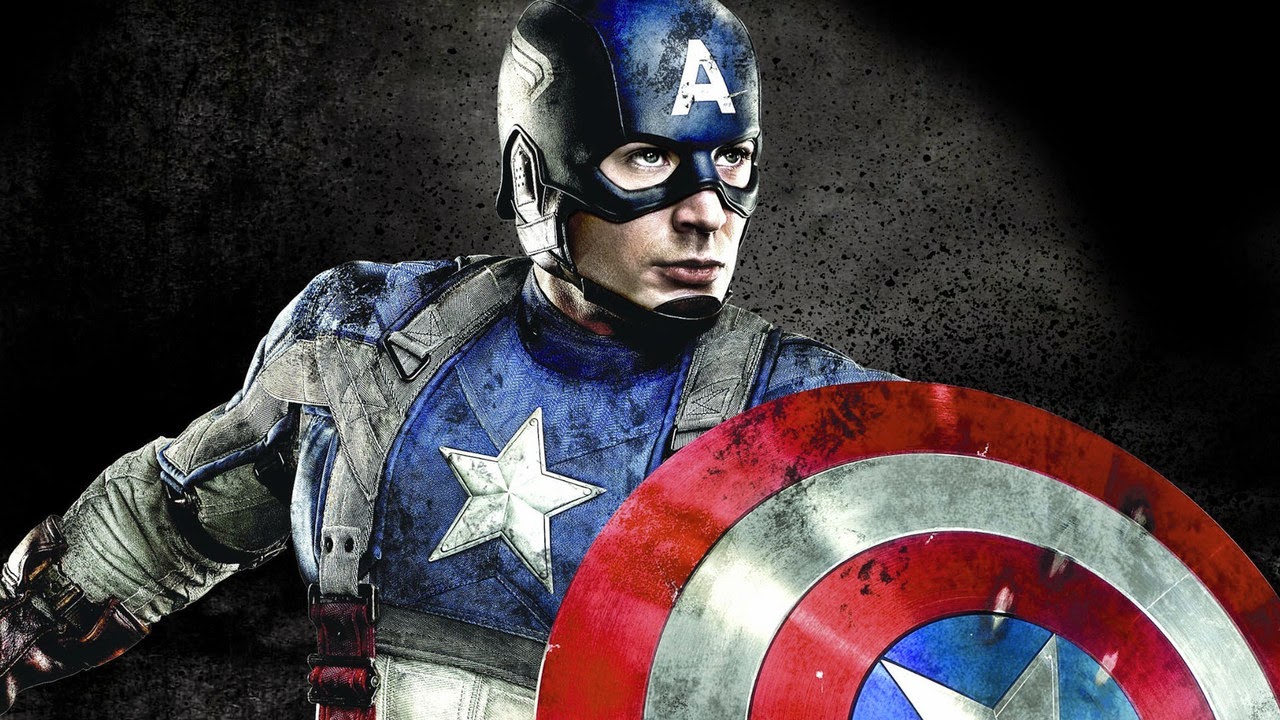
Our world is broken.  America is broken.  We all know that; but what we don’t know is how to build a better world.  Many of us seek to do so, but we often don’t know where to start and, more importantly, we don’t really know for what we are striving… but there are two men who knew both of those things – two men from whom we can learn many important lessons.  I’ve noticed a lot in common between my two favorite superheroes – which may explain why they are my favorite superheroes.  Their appearance and tactics contrast sharply with one another, but both overcame difficulty, then returned seeking truth, justice and liberty as they faced subtle, infiltrating enemies.  Both films feature epic, mind-blowing combat scenes, battles, and explosions, high-speed car chases and, ultimately, the good emerging triumphant.  One man suffered tragedy in his childhood and grew up blaming himself for the death of his parents and torn apart by a thirst for revenge.  Throughout his youth, the other was a target for bullies due to his small size.  The first conquered his fear and turned his own terror against his enemies.  The large, courageous heart of the other allowed him to overcome physical weakness.  One donned an alter-ego—something elemental, something terrifying.  The bright colors and bold stars and stripes of the other made him a national icon.  Billionaire Bruce Wayne returned to Gotham after a long absence to save his home city from poverty, corruption, and death.  Underdog Steve Rogers became a hero during World War II when he was selected to receive superhuman strength through a chemical injection, then returned from the dead, as it were, to save 21st-century America from the same subtle political villain (albeit a fictional one) that terrorized the world in the 1940s. 


I am not familiar with the comics behind these movies; my ideas focus on the character and motives of our main protagonist and antagonist in Batman Begins and the more recent release, Captain America: The Winter Soldier.  As we consider the antagonists, you’ll notice a common thread: they seem to aspire to the greatest good for the greatest amount of people, but seek to do it through death and destruction. 

In Batman Begins, the enemy is very subtle.   After witnessing his parents’ murder, Bruce Wayne relocates to Asia, where he is trained by the mysterious ninja cult leader known as Rah’s al Guhl.  When Wayne defeats his trainer in an exercise, Al Guhl is ready to initiate him into the League of Shadows, but the League’s real objective is to destroy Gotham completely and start over.

In The Winter Soldier, Alexander Pierce is head of the World Security Council, and a senior leader within SHIELD.  In essence, Pierce is Steve Rogers’ boss.  As he is explaining portions of SHIELD’s “mission” to Rogers, he says:

“To build a better world sometimes means tearing the old one down, and that makes enemies.”

At first, this sounds promising: wipe the slate clean and start over!  But think about all the good people who would have to be destroyed along with the corrupt.  It is revealed that Alexander Pierce is the leader of the HYDRA cell operating within SHIELD (HYDRA, in case you don’t know, was the Nazi-esque organization defeated in Captain America: The First Avenger).  Pierce masterminds Project Insight, the development of three new Helicarriers designed to carry out a mass assassination of all citizens recognized as a threat to HYDRA’s agenda of world domination. 

What do we do with these two villains?  When related to modern America, the essential idea presented is that we ought to put the past behind us, give up on trying to tweak and mend our current problems, and start all over. 

Bruce Wayne refused to join the League of Shadows; he returned to Gotham on his own and went undercover to fight crime as Batman.  The League had given up on Gotham, but Wayne saw hope for restoring it.  When Steve Rogers realized that the biggest threat was right under his nose, he put everything on the line to guard lives and liberty. 

“Why do we fall?  So that we can learn to pick ourselves up.” 

This line, repeated often throughout Batman Begins, has powerful implications for us, both as individuals and as a nation.  Yes, our nation is suffering; yes, we are seeing sad and tragic episodes of moral deterioration; yes, America has stumbled.  But we shouldn’t give up.  Our failures allow us to learn and grow and eventually come back stronger.  We did it in 1980 with the Reagan Revolution.  We can do it again now, and in 2016.

Tuesday, August 5, 2014

A Choice ~ Opt for the "Play World"

I’m a Coloradan, through and through – and I love this beautiful nation we call America.  But one of my very favorite places isn’t actually in Colorado, or even in the United States.  In fact, it’s not in this world at all.  It’s a place where animals talk, fauns and centaurs fight on the good side, minotaurs usually fight on the good side, dwarves wear their beards long and fight for whichever side will let them alone, the trees may be awakened to sing and walk about; and children, when they find their way there from our world, are given great responsibility and sent on magical adventures.  The ruler of the whole land is the beautiful, terrifying, majestic, and good—certainly not tame, but good—king of beasts.

If you know me well at all you may be wondering what happened to me.  Don’t worry, I definitely still love The Lord of the Rings trilogy—it is a more intense, complex, epic story and I will never stop loving it—but Narnia will always hold a special place in my heart.  I’d like to share one of my favorite stories with you.  If you think you know where I’m going and would rather skip to the punchline, be my guest, but I never get tired of this story from The Silver Chair, the sixth book of C.S. Lewis’s seven Chronicles of Narnia.

Meet Puddleglum the Marsh-Wiggle.  In case you don’t know, a Marsh-Wiggle is a tall, froggy sort of person who lives in marshy places; and one important thing that you can’t see from the picture is Puddleglum’s large, tough, webbed feet.  You also can’t see that Puddleglum is a rather pessimistic marsh-wiggle: he expects the very worst outcome of every situation.  The Silver Chair is the story of Puddleglum and two children who set out to find and rescue the lost Prince of Narnia.  It’s a wonderful story, but I must speed through it a bit.  They eventually find the Prince, under a spell in a place called the Underworld which, as the name implies, is deep under Narnia.  They break the spell (by breaking the Silver Chair, which happens to be an evil, enchanted chair) and free the Prince; but before they can get out the Enchantress returns.  She is a beautiful Lady, and when she enters the room and sees what has happened – the chair broken, the Prince freed, and an odd trio standing about with swords drawn – she doesn’t say a word.  Instead, she goes calmly over to the fireplace and tosses some green powder into the fire, then picks up her mandolin and begins to strum it.  As the air fills with a sweet smell and the enchantment begins to take its hold on the four companions, the Lady begins to ask questions.

She asks questions that make them doubt what they believe and where they came from – the existence of the “Overworld,” the stars, the sun, the fresh air (for the air is by this time very heavy with the enchanting smell, making it hard for them to think), and finally the Great Lion himself.  Then, on page 189 (the Enchantress entered the room on page 180), the Witch – for a Witch indeed she is – seems to be completing her enchantment.


The Prince and the two children were standing with their heads hung down, their cheeks flushed, their eyes half closed; the strength all gone from them; the enchantment was almost complete.  But Puddleglum, desperately gathering all his strength, walked over to the fire.  Then he did a very brave thing.  He knew it wouldn’t hurt him quite as much as it would hurt a human; for his feet (which were bare) were webbed and hard and cold-blooded like a duck’s.  Bud he knew it would hurt him badly enough; and so it did.  With his bare foot he stamped on the fire, grinding a large part of it into ashes on the flat hearth.  And three things happened at once. 

First, the sweet, heavy smell grew very much less.  For though the whole fire had not been put out, a good bit of it had, and what remained smelled very largely of burnt Marsh-Wiggle, which is not at all an enchanting smell.  This instantly made everyone’s brain far clearer.  The Prince and the children held up their heads and opened their eyes.

Secondly, the Witch, in a loud, terrible voice, utterly different from all the sweet tones she had been using up till now, called out, “What are you doing?  Dare to touch my fire again, mud-filth, and I’ll turn the blood to fire inside your veins.”

Thirdly, the pain itself made Puddleglum’s head for a moment perfectly clear and he knew exactly what he really thought.  There is nothing like a good shock of pain for dissolving certain kinds of magic.

“One word, Ma’am,” he said, coming back from the fire; limping, because of the pain.  “One word.  All you’ve been saying is quite right, I shouldn’t wonder.  I’m a chap who always liked to know the worst and then put the best face I can on it.  So I won’t deny any of what you said.  But there’s one thing more to be said, even so.  Suppose we have only dreamed, or made up, all those things—trees and grass and sun and moon and stars and Aslan himself.  Suppose we have.  Then all I can say is that, in that case, the made-up things seem a good deal more important than the real ones.  Suppose this black pit of a kingdom of yours is the only world.  Well, it strikes me as a pretty poor one.  And that’s a funny thing, when you come to think of it.  We’re just babies making up a game if you’re right.  But four babies making up a game can make a play-world that licks your real world hollow.  That’s why I’m going to stand by the play-world.

“I’m on Aslan’s side even if there isn’t any Aslan to lead it.  I’m going to live as like a Narnian as I can even if there isn’t any Narnia.

Now, I am certain, you see my thought trajectory.  America is being overwhelmed by an evil enchantment.  Call it secularism.  Call it Common Core.  Call it welfare dependence.  Call it whatever you want.  The important part is that you and I, and every American, are faced with a choice.  We can stand by and be overwhelmed by the enchantment – we can believe that our history never happened and our faith is a lie.  Or we can stamp out the fire and opt for the better world, even if it’s painful – even if they say it’s make believe.

I’m on Christ’s side, even if He doesn’t exist to lead it.  I’m going to live as like a Christian American as I can, even if America never was a Christian nation.

Are you with me?


Friday, July 4, 2014

America the Beautiful

Oh beautiful for spacious skies,
For amber waves of grain;
For purple mountain majesties
Above the fruited plain.

These patriotic words, coupled with the joyous but solemn melody, swell my heart with pride.  I also recently discovered a song by Matt Maher, Woke Up in America, that has the same effect:

I’ve seen the horizon ablaze in Arizona,
Shoreline shinin’ above California,
Moonlight dancin’ over the Dakotas;
It breaks your heart, it’s so beautiful.
Lady Liberty, she leaves the light on
From the West Side all the way to Long Island,
Carolina Coast to the Rocky Mountains;
Sun is shinin’ over me!

Ours is a beautiful nation, without a doubt!  But what makes America beautiful?  Surely the glorious mountain ranges, shining shorelines, and amber waves of grain are a part of it; but I think the amazing scenery isn’t the primary factor that makes America beautiful – the magnificence of this nation is much deeper.  Consider this portion of the same Matt Maher song:

My parents gave me a life full of dreams;
They gave me a heart to endure almost anything.
But everyone gets a broken pair of wings,
And if you try to fly you’ll fail.
…but a voice said, “lift up your head,”
And my heart burst out of my chest!

I woke up in America, for the love of God;
I woke up in America, for something bigger than myself!
More than fireworks or fanfare,
More than a star-spangled banner…
More than wealth or depression,
More than a red and blue nation,
Here in our hells and our heaven,
You’re still beautiful America…

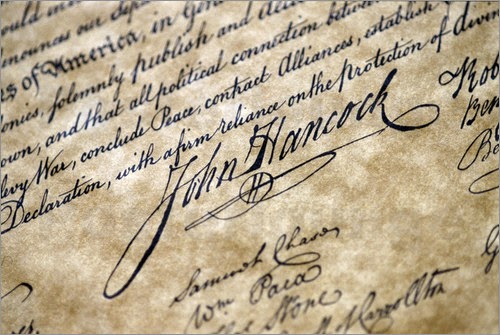
Before James Madison framed the Bill of Rights, before George Washington crossed the Delaware River, before the patriots made a teapot of Boston Harbor, before John Hancock signed his name with a flourish at the bottom of the Declaration of Independence, America already had a 200-year legacy of liberty.  Long before Patrick Henry passionately declared it in the Second Virginia Convention on March 23, 1775, the first Americans declared with their lives that they would rather die than live in chains.  Our story of faith and freedom goes back much farther in history than many Americans now realize.

By faith, the Pilgrim congregation dared to separate from the Church of England and meet secretly, then make a break for Holland in fall of 1607 – only to be caught twice and imprisoned, and lose just about everything.  The little congregation finally started new lives in Leiden, Holland, in 1609.  By faith the pilgrims reconsidered their situation in 1619, because their children were beginning to conform to the culture around them and lose their English culture, and because many of their dear ones were still suffering in England under the bondage of the “divine right” tyrant, King James.  In July 1620, once again by faith, the pilgrims sold their estates in Holland, departed from everything they had known, said farewell to friends and family, and set out to build a free nation in America.  Walking in faith despite King James’ warrant for his arrest, William Brewster came out of hiding to lead them. 

After a desperate journey across the Atlantic at just under two miles per hour, the pilgrims sought God’s will in faith and framed the Mayflower Compact.  In England, they had suffered under the imposition of the State Church; in Holland they had seen the constant strife that results from much religious liberty but little self-government, and how easily tyranny could take root as one group sought to impose its will on another.  With their principles of self-government firmly in hand, they created their own governing document.  They believed that true religious liberty could only be built upon the genuine practice of self-government, and that the government of Christ begins in the heart of the individual.  Knowing that there has always been only one foundation upon which any man can build, they sought to build their house upon the Rock: everything they did started with God. 

Signing the Mayflower Compact
In terms of authority, they defined their rights as coming from God to the people, and then delegated to governmental authorities.  In England it had been God, the king, the people; but here we have a new flow of power: God, the people, and then the government.  This is the basis for inalienable rights: our liberties are granted by God, and we grant the government the power to protect those rights.  This is a monumental pillar for Christian self-government, later to be restated in the Declaration of Independence as “We the people…”  It is also important to realize that they were not trusting in a document, but a voluntary relationship, a commitment to live together and strive towards a common goal.  The Mayflower Compact did not provide a list of laws or job descriptions for governmental officers – that would come when they wrote their Constitution in 1636 – but it did establish that this would be a government based on the rule of law rather than the rule of men.  They would govern themselves through their representatives, enacting laws that would justly protect the equal rights of citizens.  Little did they know that what they had done was unique in the history of the world: they had founded a government on a covenant rather than on a hereditary title.  They foreshadowed the Declaration of Independence, and the Constitution of Beautiful America.  What they did understand was that this was a great experiment.  They knew that the stakes were high and they had much to lose, but they also knew that God would be faithful.

After just three months, at winter’s end, 47 of the 102 colonists and half of the ship’s crew were dead.  The captain of the Mayflower was leaving and implored them to join him, but no one went back.  By faith every one of them stayed, knowing that they had come for a great cause and purpose.  Such is the strength of those who began our nation!  These passionate followers of Jesus Christ sacrificed all they had to carry the torch of liberty to these beautiful shores.  They sought religious, educational, and economic liberty, and set a precedent that our Founding Fathers would follow as they built our nation’s legal framework.

In America, some of the colonies experimented with established “state” churches, which necessarily caused infighting and division among the colonies.  By the time of the First Continental Congress, the American colonies had learned the proper division between church and state: civil government was meant to protect the rights of the church – it was not to control the church, or favor one denomination over another.  Our churches, all denominations and religions, still live under this legal umbrella.

In the way of educational liberty – one of the primary reasons the pilgrims left Holland – they believed in the Biblical mandate that parents are to train up their children in the way they should go (Deuteronomy 6:7).  When schools were created, their initial purpose was to teach children to read so they could read the Bible for themselves.  For centuries in America, the Bible was the primary textbook utilized by students who would become America’s greatest scientists, teachers, statesmen, ministers, businessmen, and military leaders; any suggestions that something else would be a more appropriate core textbook were routinely rejected.  Today, though our public schools have been completely secularized and we are fighting battles over the socialized, statist education being implemented through the Common Core, education is still largely free.  Private schools, charter schools, and home schools enjoy incredible liberty that is unique to our country.

To grasp the Biblical roots of American economic policy, consider the Jamestown colony.  After attempting a communal system where the land and produce were shared, the colonists at Jamestown recognized a problem: if everyone shared everything, whether or not they had worked for it, many would slack in their work and overall production would decline.  They implemented John Smith’s paraphrase of 2 Thessalonians 3:10, “You don’t work, you don’t eat.”  It’s simple!  Each man must earn his own living.  They also lived by the free market system illustrated in the parable of the vineyard in Matthew 20, where the employer and the employee agreed on wages without interference and independently of what any other employee was being paid, and any employee had the option to offer his services to another if he was unsatisfied with the wages he was offered.  Individuals would come to America with very limited resources and, through hard work and dedication to excellence, find their way to a higher rung on the economic ladder, and so each successive generation became more prosperous than the last.  Needless to say, our nation has fallen away from our founders’ policies and work ethic due to the apathy bred by that same prosperity, but we have strong Biblical roots, and it is much easier to restore something that has already been established than to build it anew.

O beautiful for pilgrim feet,
Whose stern impassion'd stress
A thoroughfare for freedom beat
Across the wilderness!
America! America! God mend thine ev'ry flaw,
Confirm thy soul in self-control,
Thy liberty in law!


On Independence Day in 2014, we celebrate the signing of the Declaration of Independence in 1776.  That day was the beginning of America as an independent nation, but it was the climax of decades of faith in Providence, freedom protected through self-government, and opportunity to fulfill individual potential through free market economics.  I am so thankful to live in a nation with such a rich heritage.  Yes, we have our problems and missteps and divisions, but I can’t think of anywhere on earth I would rather be.  I am proud to be an American – because our nation is built on the Holy Scriptures, by the grace of God.

America! America! God shed His grace on thee,
And crown thy good with brotherhood,
From sea to shining sea!

Monday, June 30, 2014

Apostate ~ Part 5 of 5: Making a Difference

“From all accounts, it seems the faithful opposition is reduced to Gideon’s 300.  The day has arrived for Christians to engage the battle, or there will be no Christians left – an eschatological impossibility.  From now on, true Christians will engage the battle of ideas in the academy.  The time for giving up ground is over.  Now we must fight.  The greatest wars ever fought in the history of the world are not those fought by sword or by artillery.  The greatest battles are engaged in the realm of ideas.” (Swanson, p. 191)

Throughout the last several posts, I have talked about “engaging the culture,” and “fighting the war of the worldviews.”  Swanson encourages us to “engage the battle of ideas.”  But what does that really mean?  We have established that we must engage; this post is all about how to do so.

First, though, allow me to take a brief tangent.  Many assume that homeschoolers are sheltered – that we don’t listen to popular music or play video games or go to the movies, and we read only Christian books.  Oh, and “What about socialization?” (We’ve all heard that one.)  There may be an occasional homeschooler who fits that stereotype, but in general, it’s… wrong – I would know!  I have just graduated from homeschooling.  Most of my friends are homeschooled, and all five of my siblings are being homeschooled as well.  The purpose of homeschooling is not to create sheltered—ignorant—young people, and the purpose of Kevin Swanson’s book is not to discourage us from reading the literature he examines or to shield us from the views contained therein.  Of course, we shouldn’t give Mark Twain’s Huck Finn to a middle school student without direction or coaching; my brother recently read it and The Adventures of Tom Sawyer, and when I opened a discussion about Twain’s worldview, he stated, “Well, he sure wrote some good books!”  I tried to correct him, but he maintained that the books were harmless and innocent – purely fun and entertaining.  I was terrified.  That is exactly what Swanson was talking about!  So, perhaps “sheltered” is a good thing to be, at least for a time, but we aren’t to remain sheltered as we grow more mature.  I think Mr. Swanson himself explains it best:

“On the one hand, well-crafted literature requires close communion in order to understand the content and fully appreciate its emotional tones and its several layers of thought.  As it turns out, the devil is a good writer, and ungodly men often produce excellent literature in form.  On the other hand, the Christian reader must consciously hold the ideas at arm’s length, so as not to commune with the unfruitful works of darkness, or meditate long and hard on things that are not true, not lovely, and not pure (Philippians 4:8).” (Swanson, p. 250)

When discussing our nation’s current moral fiber—or apparent lack thereof—I believe Swanson’s diagnosis is correct, but his solution is faulty.  He is correct in his analysis of what has happened, but he gives at best a vague recommendation for what we ought to do moving forward.  I have recently been listening to Kevin Swanson’s radio broadcast, Generations Radio (available at generationsradio.com).  I generally agree with Mr. Swanson’s positions, and I would highly recommend his program.  However, Mr. Swanson regularly states that Christianity is taking root in Middle Eastern and African nations—Islamic nations.  I personally have not done the research necessary to validate this claim, but that is irrelevant.  It may be true, and if so it is worthy of rejoicing, but I must point out Mr. Swanson’s underlying argument.  His purpose in pointing this out seems to be that, though America is falling from Christianity, it doesn’t matter, because the Kingdom will live on elsewhere.  There is an element of truth there, of course: Christ’s kingdom will always triumph; it is not dependent upon any man or nation, because it is eternal.  However, if you have read my blog for any amount of time, you know that talk of the end of America leaves me infuriated and heartbroken.  We must not give up on this mighty, beautiful nation!  We were founded upon the Rock, and on the Rock we must stand.  (Stay tuned for my July 4 post, America the Beautiful). 

I have identified four steps we must take in order to engage the culture and begin to restore a moral society without compromising our faith.

First, know what you believe.  How does one learn to identify counterfeit money?  It would be futile to study it, because it has so many variations and looks very real; no, to recognize counterfeit money, one ought to study the real money!  That way, he will know when what he is holding in his hands is not true currency.  Likewise with worldviews: rather than studying all the beliefs of every culture and religion, we should become very familiar with God’s Word.  This doesn’t mean we shouldn’t become familiar with other beliefs to better equip ourselves to converse intelligently with those who hold them, but our primary focus must be on the truth so that when a view is presented that is not true, we can identify it.

Next, understand the history presented in Apostate, and then some.  Research the life and death of the authors – as we saw, their personal lives often manifest their philosophies very plainly.  Then read, watch, and listen to the literature and media that is presented.  I have read many of our great American “classics” and explored them according to Mr. Swanson’s method; he’s right – many of our nation’s most revered authors were dangerous, and our founders would have abhorred their material.  I also believe in watching the movies that are popular and reading books that are being written for our generation.  There are, of course, some that should be avoided; discretion should always be exercised, but do not eliminate a new movie simply because it’s “non-Christian,” or because of a rumor that it promotes a liberal agenda.  Bill Jack of Worldview Academy urges his students to “THINK your way through it.”  Watch that movie that you’ve heard contains a gay or feminist agenda, and think about the problem spots and the good points.

Finally, engage the culture.  This is probably the hardest part, but in many ways it’s the most important.  This is the call to action – this is the Great Commission.  The point is to save souls, but how does that relate to media?  A friend of mine who has a lot of experience in the media/communications realm helped me begin to wrap my mind around it.  It was a rather wildly spun, fascinating conversation that began with Disney’s Frozen, and turned towards Apostate.  Ultimately, he pointed out, we have to know the culture if we are going to save it.  We can’t explode out of our sheltered little bubble and suddenly expect people to follow us to Jesus.  I think of the “men of Issachar” mentioned in 1 Chronicles 12:32 – they “understood the times and knew what they should do.”  Books, music, and movies are a big talking point these days.  A great conversation starter is always, “So, have you seen any good movies lately?”  We can use that!  The purpose isn’t to judge media and either add it to our “Favorites” list or eliminate it; the point is to understand it so that we can use it to deliver the Good News.

Besides Apostate, there are a couple of other books that will get you thinking and help equip you as a valiant warrior of the Kingdom.  The Hour That Changes the World, by Dick Eastman, outlines a practical method for prayer.  If any great changes are to be wrought in our nation and our world, it will only be through the power of prayer.  For “church kids” like myself, Growing Up Christian by Karl Graustein is an excellent read.  It awakened me to the unique dangers that we “church kids” face – growing up in a Christian home, constantly hearing and reading God’s Word, it’s easy to learn and believe only in our mind, or piggyback on our parents’ faith.  That’s a dangerous road to take, because as soon as we become exposed to the world through literature, movies, music, secular college classes, or the magazine rack at the grocery store, we will falter if our faith is not our own.  Finally, read Assumptions That Affect Our Lives by Dr. Christian Overman.  Through a step-by-step comparison between Ancient Greece and modern America, this book emphasizes the importance of consciously filtering the assumptions that we make, because those assumptions are the foundation of our beliefs, our actions, and the course our world takes.

That concludes my study of Apostate: The Men Who Destroyed the Christian West.  Thank you for reading; I hope you have been informed, awakened, inspired, frightened, emboldened, empowered, or all of the above.

“For our struggle is not against flesh and blood, but against the rulers, against the powers, against the world forces of this darkness, against the spiritual forces of wickedness in the heavenly places.
(Ephesians 6:12, NASB)

Saturday, June 28, 2014

Apostate ~ Part 4 of 5: Music and Media

Throughout the centuries, we have seen a clear theme: Apostasy begins with the division of one generation from another.  Breaking the fifth commandment is always at the root of a cultural or social revolution, and it is often the key ingredient for bloody political revolutions as well.  God says honor your parents; idealistic humanism says rebel and follow your heart.  God says the education of and jurisdiction over children belongs to the parents; humanism claims that the education of children should be by the state for the benefit of society.  God gives an order, and man contradicts it. 

Without the centralization of power, it would have been impossible to incorporate this man-centered view of life and reality into the mainstream of a Christian civilization.  The instinct to centralize power may be traced all the way back to the Tower of Babel, when natural man determined to “build a tower and make a name for themselves” (Genesis 11:4).  During the last century, the focus has been on building highly centralized control mechanisms for the political state, the educational systems, and mass media.  Television and media networks have enabled an astounding degree of power centralization in the communications realm; while there are a few alternative sources and small Christian networks, the major networks needed only to control the widespread distribution of ideas by film and television in order to create uniformity of thought among the populace. 

Mr. Swanson accurately points out that “media replaced the church and the family as the means by which society transfers information, inculcates worldviews, and forms the culture.” (Swanson, p. 271)  Today, 80% of youth turn from their parents’ faith within a single generation.  He continues with some striking comparisons:

“Laura Ingalls and her sisters would never have rushed into Times Square in New York City to fall at the feet of teen-star Frank Sinatra.  Would President John Adams' daughters have screamed for hours through an Elvis Presley concert, as the star gyrated about the stage creating sexual tension in the crowd?  These people lived in a different social context. … Sometime during the last century, the most influential and popular cultural icons moved from the church to Hollywood and Nashville.  The most popular song in the nation in the 1800s was My Grandfather’s Clock, a song which honored the memory of a grandfather.  Today, Eminem refers to his mother as a “female dog,” and Katy Perry promotes lesbianism in her popular songs.  For those who missed it, that is total cultural and social revolution in a nutshell.” (Swanson, p. 272)

The Cultural Giants
As I’m sure your astute observational capabilities have already told you, this segment is dedicated to the social and cultural leaders of the modern era, primarily in music.  Swanson gives an overview of five of America’s most popular music artists over the last sixty years; they were also the most influential – the most effective at severing America from her Christian heritage. 

The Beatles/John Lennon (1960s) ~ The band members were all raised in Protestant homes, but professed Agnosticism, Atheism, Humanism, or Hinduism.  John Lennon, possibly the most influential songwriter of modern times, followed Bentham, Marx, Nietzsche, and the others and sought victory over Jesus Christ.  In his lyrics, Lennon abstracts a world without Heaven or hell, or private property ownership – remarkably reminiscent of the atheism and egalitarianism of Karl Marx.  The Beatles, Swanson says, shaped the spirit of the age; they led the cultural and sexual revolutions of the modern West.

Michael Jackson (1980s) ~ As a lapsed Jehovah’s Witness adherent who dabbles in Islam, Swanson uses him as a supreme example of American apostasy at its worst.  His music presented the lure of evil in positive terms.  He followed the Nietzschean tradition and took the world beyond good and evil into ethical ambiguity and confusion.

Madonna (2000s) ~ Though brought up in a Roman Catholic home, she promoted premarital sex, homosexuality, and female sexual domination throughout her career.

Elton John (1990s) ~ A professed homosexual since he “came out of the closet” in 1975, he opened the door for many other musicians to accept and promote homosexuality.

Led Zeppelin (1970s) ~ The heavy metal genre seemed to attract the more epistemologically self-conscious demon-worshippers, and this band led the charge.  Part of the demonic nature is confusion and contradictions: they glorified Satan while calling into question the very existence of the supernatural.  Swanson points out that Led Zeppelin were akin to the pre-flood giants mentioned in Genesis 6 and Numbers 13: the God-hating, murderous Nephilm.  Eventually, the band’s infatuation with Satanism caught up with them, and what they perceived to be demonic attacks contributed to the dissolution of the band in the 1980s. 


The celebrities are leading today’s apostasy.  Through music, the worldviews of Bentham, Marx, Nietzsche, Satre, and Emerson are pumped into the brains of billions of people.  Elvis Presley, Katy Perry, Eminem, Miley Cyrus, and several others make the list; but they simply present more of the same: sexual immorality, teenage rebellion, and ethical inconsistency.  Through the 1990s and 2000s, popular music became increasingly disjointed and purposeless.  Postmodern man is coming to a self-consciousness of his meaningless and committing epistemological suicide.  Music and movies are being largely supplanted by computer and video games.  Because of social media web sites and mobile devices, short text messages and fabricated photos are replacing genuine, face-to-face relationships.  We can’t stay on the present course of decadence and self-immolation much longer.  Where do we go next?  What can we do to reverse course?

Tuesday, June 17, 2014

Apostate ~ Part 3 of 5: Literature

“Wisdom and folly both are like meats that are wholesome and unwholesome, and courtly or simple words are like town-made or rustic vessels—both kinds of food may be served in either kind of dish.”
– Saint Augustine (Swanson, p.192)

While the philosophers wrote primarily for academics, America’s literary giants served their deadly philosophies to the common man.  In Kevin Swanson’s own words, “Apostasy was a slow and arduous process.  It was no easy task to throw off 40 generations of Christian heritage.  The apostasy had to slowly take root through the 16th, 17th, and 18th centuries, and steadily turn men towards a man-centered ethic, metaphysic, and epistemology.  Finally, in the 19th century, authors could express their humanist faith in blatant and stunning clarity for mass consumption.” (Swanson, p. 190)  I do not contend that we are too far gone to return, or that all literature has that kind of negative impact on our culture; however, I agree with Swanson that Christians must be vigorously engaged in the war of the worldviews, because the greatest battles are fought in the realm of ideas.

There are certainly those literary “greats” whose works may indeed be classified as good – Charles Dickens, C.S. Lewis, and J.R.R. Tolkien, just to name a few – but the idea that all “great” literature is good literature is a dangerous myth.  We must discern carefully between the good, the bad, and the ugly; that is what Kevin Swanson seeks to do in the next section of his book.

William Shakespeare, 1564-1616
Did Shakespeare really represent a robust Christian orthodoxy?  Not so much.  Contrary to popular argumentation, his work was not fundamentally Christian.  Yes, his plays contain some 2,000 Bible references, but that is to be expected from any 16th-century author.  God was not his source of reality, ethics, and truth.  Writing during the Puritan Reformation, he cloaked his profanity and obscenity, but his work cracked open the door for sexual revolution in future generations.  While Shakespeare properly condemns homosexuality once in Troilus and Cressida, it is strange and perverse that his love sonnets were written to a man (a “Mr. W.H.). 

Shakespeare’s view of reality, God, life after death, sin, and atonement is hard to pin down from his writings.  Some of his characters speak of purgatory, and many affirm the existence of heaven and hell; occasionally, his characters toy with materialism and annihilationism.  There seems to be a synthesis of Christian and pagan perspectives within Shakespeare’s writings, and the pagan often triumphs.  Shakespeare wavers; sometimes man controls his own destiny, and sometimes (like in Macbeth) the “fates” control man’s destiny.  Christian themes pepper his plays, but only because he had to reckon with a millennium and a half of Christianity in English thought and life.  It is very clear that William Shakespeare could not commit to the idea of a sovereign God.

Nathaniel Hawthorne, 1804-1864 ~ The Scarlet Letter
According to Swanson, Hawthorne championed the redirection of our nation’s cultural and moral convictions.  The Scarlet Letter showcases all the dangerous tenets of his worldview.  The most obvious problem with the novel is that the heroine is an adulteress – hence the scarlet letter A.  Throughout the book, Hawthorne toyed with the idea of repentance, then opts for flight, and ultimately enshrines the sin of adultery as the adulteress becomes a mentor for wayward young women.  The Scarlet Letter is a frontal attack on the Seventh Commandment; Hawthorne would be delighted that divorce is so commonplace in Western societies today.  Also problematic is the glorification of witchcraft throughout the story – Hawthorne refused to acknowledge witchcraft as a sin. 

The Puritans represent one of the strongest expressions of Christian orthodoxy in the 17th century; they were everything the apostates hated, and Hawthorne expressed a poignant disdain for them and painted them as stiff-necked, evil hypocrites.  He played with fire: he was quick to point out hypocrisy in the lives of Christians, while excusing and even endorsing the more egregious sins of adultery and witchcraft.  There are several other deeply spiritual problems with and assumptions behind Hawthorne’s novel, but these are the most evident.

Nathaniel Hawthorne was a genius, and The Scarlet Letter was his magnum opus.  I read it last year for school, before I read Apostate, and, while I detected the danger of glorifying witchcraft and the evil of ultimately enthroning adultery, Mr. Swanson's book brought even more to light.  Swanson contends that no other publication of any genre has been so influential on a spiritual level – so effective at severing a nation from its Christian heritage.  Hawthorne himself called it “a hell-fired tale.” 

Mark Twain, 1835-1910 ~ Huckleberry Finn
Samuel Langhorne Clemens (“Mark Twain”) popularized the American independent spirit – and out of this new breed of independent Americans there came a great deal of family-disintegrating feminism, teen rebellion, murderous violence, divorce, strange cults, and weak Christian churches.  Mark Twain both played off of this social setting and contributed to it. Twain’s mother was Presbyterian, but his father was a deist.  For most of his life, Twain cloaked his atheism in humor and mockery, but it became increasingly foreboding: he called the Bible “the most damnatory biography that exists in print anywhere,” and referred to God as “repulsive” and “malignant.”  Like Hawthorne, Twain created “straw man” Christians, took advantage of a weakened American faith, blatantly mocked the ideas of God’s judgment and hell, and presented his “better ethical system.” 

In Twain’s The Adventures of Huckleberry Finn, the main character is presented as a likable, footloose and free, practical-minded American who is confused and turned off by the “Christian” characters he meets.  Virtually all of the characters in the story are half buried in 1,500 years of Christianity, but all of the Christians are presented in varying shades of hypocrisy and ignorance, creating a thoroughly negative impression of the Christian faith.  Whereas Hawthorne mocked a certain form of Christianity (Puritanism), Twain unashamedly bashes every aspect of the faith.  While Hawthorne’s characters made futile attempts to self-atone, Twain’s protagonist sees no need to atone for his guilt.  Twain took advantage of the uncritical mind and the biblically illiterate Christian: he knew how to construct complicated ethical scenarios that leave the unwary Christian reader tied up in knots.  

Mark Twain was the quintessential American author – arguably the most popular writer this country has ever produced – and The Adventures of Huckleberry Finn is an American classic.  Ernest Hemingway went so far as to say that “all modern American literature stems from this one book.”  While I personally haven't read the book, Mr. Swanson rightly points out that this novel has won the hearts of millions of Americans… towards Twain’s strident agnosticism.  The book was written for adults and children alike, many of whom morphed into Mark Twain’s worldview without realizing it.  Kevin Swanson warns, “If Christians do not recognize the work of Satan in men like Mark Twain, they will most likely be deceived by men… like Mark Twain.” (Swanson, p. 235)

Ernest Hemingway, 1899-1961 ~ The Old Man and the Sea
All of the apostates featured up to this point belonged to denominations of Christianity with deep roots in Western Europe.  By the turn of the 20th century, however, America had developed a new form of Christianity that was highly individualized and aggressively evangelistic.  The generational roots never ran very deep in this sect of the Christian faith; those who were converted in the revival services of Charles Finney and Dwight L. Moody typically remained strong in the faith, but apostasy came easily for their children.  Ernest Hemingway was born into one of these evangelical Christian families, and had a typical rearing in evangelicalism.  On his 16th birthday, his father wrote, “I want you to represent all that is good and noble and brave and courteous in Manhood, and fear God and respect women.”  His father’s vision was not to be.

While still in his teens, Hemingway produced several shockingly pornographic stories, pouring out a torrent of foul language previously unheard of in American literature.  He was a pioneer in teen rebellion and sexual decadence from the very beginning of his writing career.  His rebellion manifests itself in radical, pathological, and even dangerous or sinister ways, and he seemed to favor abusing the name of Jesus Christ.  Most of the agnostics and atheists of the 19th century were never so bold as to employ the kind of blasphemous language that Hemingway introduced in the 20th century.

The Old Man and the Sea, which won Hemingway the 1953 Pulitzer Prize and the 1954 Nobel Prize, is the story of an old fisherman who wants to make a name for himself, so after a long, unsuccessful fishing career he launches out into deep water and hooks the biggest marlin of his life.  He wrestles the marlin for five long days.  Hemingway’s humanist ideology is clear when the fisherman says, “A man can be destroyed, but not defeated.”  According to Hemingway, man lives his life to the fullest when he fights to the bloody end; the purpose of life is to strive for mastery over the environmental forces that surround man, even though his efforts are always futile.  Man always dies in the end.  Hemingway doesn’t bother to mock God as Mark Twain did, or focus on guilt as Hawthorne world.  He makes no provision for God’s providence or judgment, human guilt, or the eternality of the soul.  Atheism is a given.  God is dead.

Though I haven't read The Old Man and the Sea, I have read several of Hemingway's short stories, and I notice a common thread.  Hemingway’s stories are hopeless.  His metaphysic disallows all meaning and purpose to life or death.  Swanson writes, “The modern hero is a vagabond, alone in the cold empty world of postmodern existentialism.  The modern hero is lonely because he kills human relationships as Cain killed his brother.” (Swanson, p. 256)  Hemingway crossed the “line of despair”: in the age of Descartes and Locke, man was optimistic in his attempts to define reality, truth, and ethics on his own terms, but by the 20th century, literary figures like Hemingway and Steinbeck had succumbed to pessimism and suicidal nihilism.  Hemingway lived and died consistent with his worldview: he lived a licentious existence, and then took his own life at the end.

John Steinbeck, 1902-1968 ~ Of Mice and Men
Steinbeck’s life bore striking similarities to Hemingway’s in many respects.  He was born into a family with a strong Christian heritage; by age eighteen, his hatred for the Christian faith was evident to all who knew him.  Steinbeck did not end his own life, as did Hemingway, but he bears the distinction of being the first great apostate to abort his own child, 33 years before the American Supreme Court approved convenience abortion.  Teen rebellion was the defining spirit of the 20th century, and both Steinbeck and Hemingway were out in front of the crowd.  He was married twice; both marriages were marred with multiple affairs, and both ended in divorce.  Swanson writes, “John Steinbeck took his apostasy seriously.  It was his task to lead the Western world into adultery, divorce, and abortion.”  (Swanson, p. 261)   John Steinbeck understood the historical and present reality of the ruling power of Jesus Christ, and deliberately set himself against Him.  In the words of Kevin Swanson, “The brave existentialist is hopelessly self-oriented in his choices, and he sentences himself to a life of loneliness and the death of a culture.”  (Swanson, p. 266)

Steinbeck’s Of Mice and Men was a toxic little book with significant cultural impact, winning the author the Nobel Prize for Literature in 1962.  I began reading it a few months ago, and found myself unable to finish it.  I simply couldn't bear it.  The story is a horrible downward spiral that begins with two friends whose relationship is strained by the foul, abusive attitude of one and the mental retardation and strange habits of the other.  It deteriorates with the killing of an old dog – only friend to a poor old man.  One killing or sexual advance leads to another, and the story ends in a series of “senseless” murders – senseless because everything in Steinbeck’s world is senseless.  To the Christian, the most shocking aspect of this book is the unrelenting abuse of God’s name, found in almost every sentence of the story.  The foul language illustrates the rebellion against God that was so popular in the 20th century.  Genesis 4:14-16 summarizes Steinbeck’s writings: after Adam sinned against God and cut off his relationship with Him, Cain killed his brother and John Steinbeck killed his child, and they became vagabonds of the earth.  This is the plight of postmodern man: he terminates his relationships with God, family, church, and community and wanders from city to city.  What little friendship remains in the world is destroyed when someone shoots the old man’s dog. 


William Shakespeare became famous for casting doubt on the ultimate reality of God’s judgment.  Nathaniel Hawthorne received acclaim for glorifying the hideous sins of adultery and witchcraft and making all that is good appear evil.  Mark Twain became a champion of children’s literature when he enthroned deceit and questionable ethics.  Hemingway won prizes for his despairing, endless circle where suffering, life and death are meaningless.  John Steinbeck was awarded a Nobel Prize when he described the barrenness, emptiness, loneliness, and death of the modern world, where there are many people and any meaningful relationships are senselessly sacrificed.  This is the literary world into which my generation is coming; and this literary world is creating a real world where relationships are superficial, sexual sin is practically ubiquitous, God is irrelevant, and everything is meaningless.  The time for battle is now.  We must take up our pens and our keyboards and engage in the war of the worldviews.